
Blog
Porcelain vs. Composite Veneers in Tauranga: Costs, Procedure & Smile Design Guide


Porcelain veneers cost more than composite but last longer and resist staining better. Composite veneers are applied in one visit at a lower upfront price. ER Dental offers both options across its three Tauranga clinics, helping patients choose the best material for their smile goals and budget.
Key Takeaways
- Porcelain veneers cost $900 to $2,500+ per tooth, while composite veneers cost $250 to $800 per tooth.
- Composite veneers require a single appointment, whereas porcelain veneers need one to three visits.
- Porcelain veneers last longer than composite veneers, which typically last five to eight years.
- Composite veneers are repairable if damaged, but porcelain veneers are less easily repaired.
What are porcelain and composite veneers?
Dental veneers are wafer-thin shells that cover the front, visible surfaces of teeth to correct aesthetic imperfections. Patients in Tauranga use veneers to address discoloration, chips, gaps, and uneven spacing. The result is a smile patients feel proud to show off, as highlighted by Holliston Dentist.
Two primary materials define the veneer category: composite resin and porcelain. Each material suits different clinical situations and patient preferences.
Composite veneers are made from a type of durable plastic called composite resin. The dentist applies this tooth-colored material directly to the prepared tooth surface. A single appointment often completes the placement. The resin is sculpted, shaped, and hardened with a curing light. Composite veneers offer a conservative approach that preserves more natural tooth structure. For Tauranga residents interested in same-day smile improvements, composite veneers tauranga represent a practical entry point into cosmetic dentistry. ER Dental offers composite veneers as part of its full suite of cosmetic dental services across its three Tauranga and Omokoroa locations.
How do porcelain veneers differ from composite?
Porcelain veneers are made from a high-quality ceramic material called porcelain. Unlike composite, porcelain veneers typically require one to three visits. The dentist removes a small amount of enamel, takes impressions, and sends the case to a dental laboratory. Temporary veneers protect the teeth while the lab fabricates the permanent shells.
The porcelain material mimics natural enamel in translucency and light reflection. The ceramic surface resists staining better than composite resin. When Tauranga patients evaluate porcelain veneers cost nz, they weigh this durability and aesthetic quality against the higher initial investment. Porcelain veneers typically last longer than composite alternatives when maintained with proper oral hygiene.
Which type looks more natural?
Porcelain’s ceramic composition reflects light similarly to natural tooth enamel. Composite resin achieves good aesthetic results but lacks porcelain’s depth and translucency. The skill of the clinician matters significantly with both materials. A meticulously shaped composite veneer by an experienced cosmetic dentist produces excellent results. Porcelain’s lab-fabricated surface delivers a lifelike finish that resists dulling over time.
ER Dental, known as “the dentists with a difference” and locally owned by Dr. Riaan and Dr. Estee Kriek, helps patients compare these options through personalized consultations. The clinician evaluates tooth condition, bite forces, and aesthetic goals before recommending one material over the other. Both pathways lead to a transformed smile when matched to the right patient.
Who Is a Good Candidate for Veneers?
Not every smile concern calls for a full veneer treatment, but patients with the following are usually good candidates for either material:
- Chipped or cracked teeth
- Stained teeth that have resisted whitening treatments
- Uneven tooth shape or size
- Small gaps between teeth
- Worn enamel
- Mild alignment concerns
- Cosmetic imperfections affecting confidence
How do costs compare for dental veneers Tauranga?
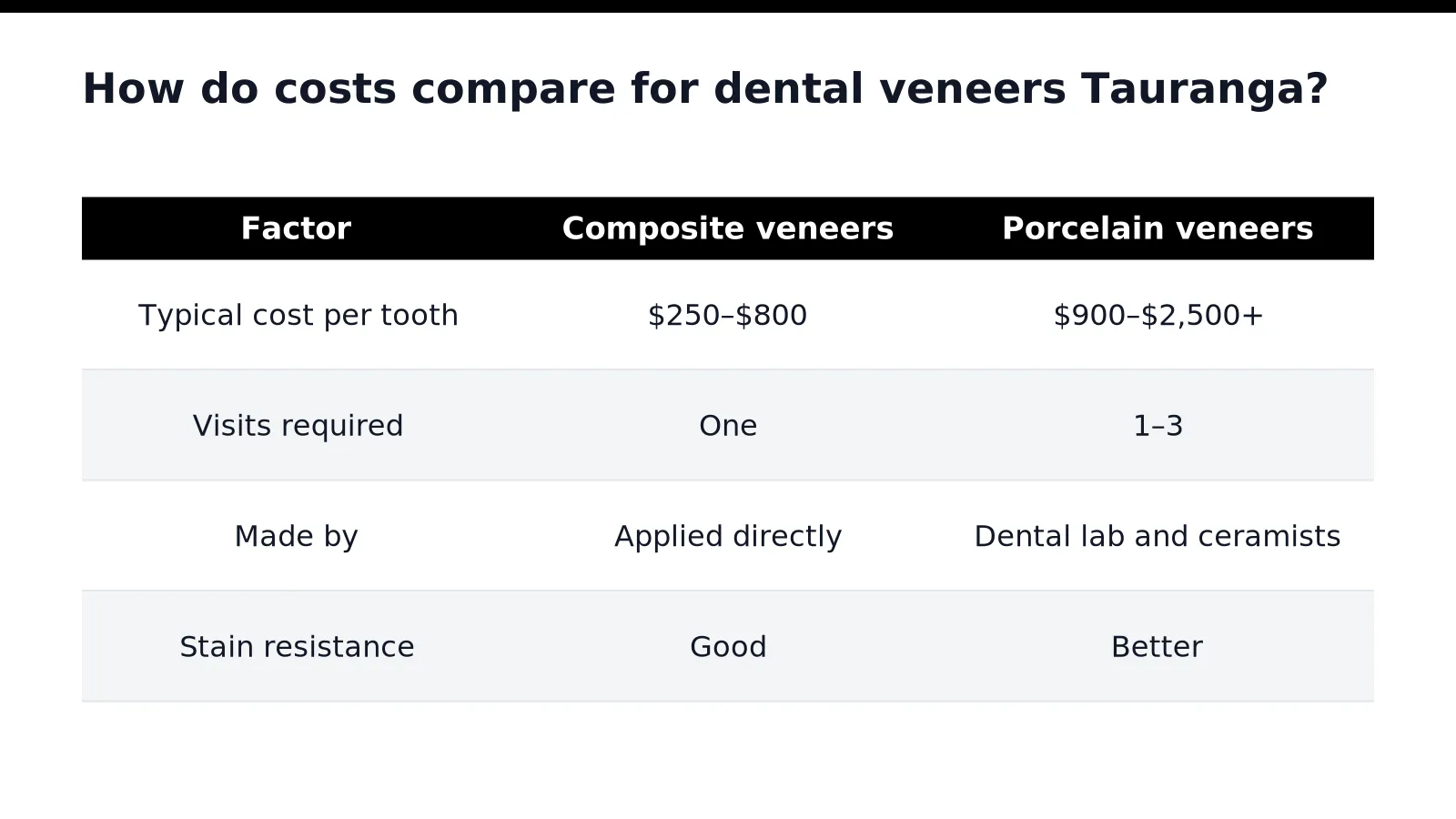
Composite veneers cost less up front, commonly $250 to $800 per tooth, while porcelain veneers generally run $900 to $2,500 or more per tooth. That price gap shapes the choice for many Tauranga patients weighing appearance against outlay.
Composite resin is applied directly to the tooth, so composite veneers Tauranga patients often complete treatment in a single visit. Porcelain takes a different path. A dental lab and skilled ceramists craft each thin shell, and those material and lab fees push the up-front figure higher. Porcelain also requires 1 to 3 visits and delivers a more lifelike finish that resists staining better.
Why do porcelain veneers cost more than composite?
Porcelain demands a dental lab and skilled ceramists, which raises material and lab fees. That craftsmanship explains much of the higher porcelain veneers cost NZ patients see quoted. Composite skips the lab stage entirely, so the savings show up immediately.
Can Tauranga patients spread the cost?
ER Dental accepts Afterpay, Q Card, Southern Cross, and WINZ to help manage treatment costs. Payment flexibility matters when several teeth need coverage. A full smile makeover multiplies the per-tooth figures quickly, and staged payments keep the budget manageable. Patients comparing dental veneers Tauranga options can review the clinic’s veneer treatment page before booking a consultation.
Cost is only one factor. Longevity, enamel removal, and bite all influence which material suits a given smile. ER Dental, the dentists with a difference, guides Tauranga patients through that comparison in person.

Which lasts longer: porcelain or composite veneers?
Porcelain veneers outlast composite veneers, and the gap is significant. Composite resin restorations typically last 5 to 8 years, while porcelain’s lab-made ceramic construction gives it the longer service life of the two materials. For Tauranga residents weighing dental veneers tauranga options, that lifespan difference shapes both the treatment plan and the long-term spend.
The two materials behave differently once they are bonded to a tooth.
- Typical lifespan: Composite veneers last 5 to 8 years, while porcelain veneers last longer.
- Stain resistance: Composite veneers resist stains less well than porcelain veneers.
- Repairability: Composite veneers are repairable if damaged, while porcelain veneers are less easily repaired.
- Visits required: Composite veneers need a single appointment, while porcelain veneers need 1 to 3 visits.
Can composite veneers be repaired rather than replaced?
Composite veneers are repairable when damage occurs. A dentist layers and sculpts the tooth-colored resin directly onto the tooth, so small chips and worn edges can often be rebuilt. This repairability offsets some of the shorter lifespan, because a repair extends the restoration without a full replacement.
Do porcelain veneers stay brighter for longer?
Porcelain veneers resist stains better than composite veneers. The lab-made ceramic holds its lifelike appearance and color over time, which matters for anyone comparing composite veneers tauranga treatment against ceramic alternatives. Composite resin is faster, less invasive, and less expensive up front, but it needs more upkeep to keep its finish.
Precision matters at every stage. ER Dental uses advanced technology such as CEREC same-day crowns for precise ceramic restorations, and the team at this practice, known as the dentists with a difference, guides patients through material choices with clear advice on porcelain veneers cost nz and expected longevity.

Caring for Veneers After Treatment
Good daily habits help both veneer types reach their full lifespan:
- Brush and floss daily to keep the margin around each veneer free of plaque
- Limit stain-heavy foods and drinks such as coffee, tea, and red wine, especially with composite veneers
- Avoid biting hard objects like ice or pen caps, which can chip either material
- Wear a night guard if grinding or clenching is a concern
- Keep up with regular check-ups so the dentist can spot wear or damage early
What is the procedure for composite veneers Tauranga?
Composite veneers in Tauranga are completed in a single appointment. The dentist layers and sculpts tooth-colored resin directly onto the tooth surface, delivering immediate cosmetic results without multiple visits.
The procedure begins with a thorough consultation. The dentist examines the tooth structure, discusses the desired shape and shade, and prepares the tooth surface with minimal enamel removal. Composite resin is far less invasive than alternatives that require lab fabrication.
How long does the composite veneer process take?
A full composite veneer treatment finishes in one visit. Porcelain veneers, by contrast, take 1 to 3 visits because they are thin, lab-made shells bonded to teeth. The single-appointment nature of composite veneers makes them a practical choice for patients with busy schedules.
What happens during the resin application?
The dentist applies the composite resin in layers. Each layer is carefully shaped and hardened with a curing light before the next is added. This build-up technique allows precise control over the final contour and translucency. Once the desired form is achieved, the veneer is polished to a natural lustre.
ER Dental provides comprehensive dental care across three modern clinics in Seventh Avenue, Omokoroa, and Pyes Pa. Patients across Tauranga access this procedure in a setting designed for comfort and clinical precision. The resin material bonds securely to the prepared tooth, and the finished veneer blends seamlessly with surrounding teeth. No temporaries are needed, and the patient leaves with a transformed smile the same day.
- Consultation: the dentist examines tooth structure and discusses the desired shape and shade.
- Tooth preparation: minimal enamel removal readies the tooth surface for bonding.
- Resin application: tooth-colored composite resin is applied in layers directly onto the tooth.
- Shaping and curing: each layer is sculpted and hardened with a curing light before the next is added.
- Polishing: the finished veneer is polished to a natural lustre that blends with surrounding teeth.
How does smile design factor into porcelain veneers cost NZ?
Smile design shapes every decision behind porcelain veneers cost NZ, turning a cosmetic procedure into a fully customized treatment plan. A thoughtfully designed smile requires more lab work, more clinical precision, and more artistic input, all of which raise the final investment.
What makes porcelain veneers look more lifelike than composite alternatives?
Porcelain veneers are thin, lab-made shells bonded to teeth. The fabrication process typically spans 1 to 3 visits. Compared to composite resin applied directly in the chair, porcelain delivers a more lifelike appearance and resists stains better. Those qualities come at a price: porcelain veneers cost more up front, with per-tooth figures ranging from $900 to $2,500+ internationally. In Tauranga, smile design consultations at clinics like ER Dental map out exactly how many teeth need treatment and what level of customization the result demands.
Does the design process affect how long treatment takes?
Custom smile design often lengthens the treatment timeline. A single porcelain veneer case moves through diagnostic wax-ups, digital imaging, and multiple try-in stages before final bonding. Each step refines the fit and aesthetics. Composite veneers Tauranga patients choose sometimes skip this lab phase entirely, since composite material is sculpted directly onto the tooth in one visit. That speed reduces upfront cost but trades away the depth of customization porcelain offers.
Both porcelain and composite veneers help boost confidence and improve appearance by delivering many of the same core benefits. The difference lies in how deeply the smile design process shapes the outcome. More design equals more technician hours, more chair time, and a higher total cost. ER Dental, the dentists with a difference and the most highly reviewed dental group in the Bay of Plenty, anchors every smile design in a pain-free philosophy where all procedures prioritize maximum comfort.
FAQ
How many visits do porcelain veneers require?
Porcelain veneers need one to three visits, while composite veneers require a single appointment.
What is the cost range for composite veneers per tooth?
Composite veneers cost $250 to $800 per tooth.
Which veneer material resists staining better?
Porcelain veneers resist staining better than composite resin.
Conclusion
Weighing porcelain against composite veneers comes down to your priorities: composite offers a faster, less invasive, single-visit solution with repairability, while porcelain delivers longer life and better stain resistance through a more involved design process. Both improve appearance and confidence, so the right choice depends on your timeline, budget, and how much customization you want. A consultation at ER Dental maps out which material suits your smile goals, with every procedure anchored in a comfort-first philosophy.